Biologist starts crying after finding flower he had been searching for 13 years
'The feeling of seeing it was like seeing my first child...' he said.

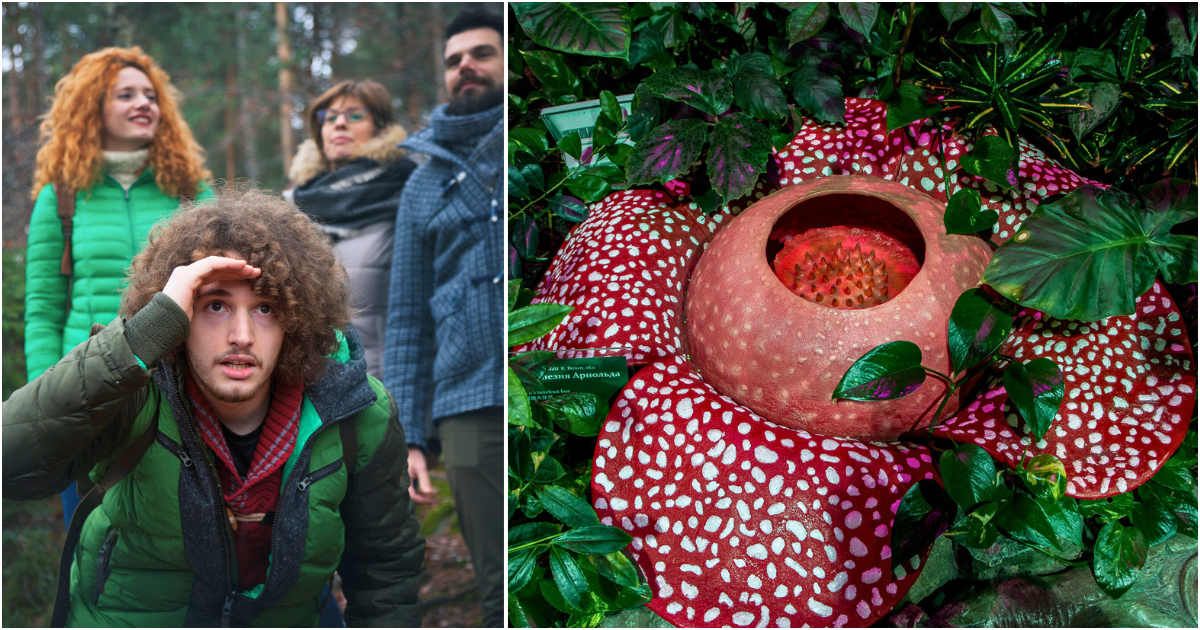
Imagine spending years in the dense Sumatran rainforest in Indonesia, searching for Rafflesia hasseltii, one of the world's rarest flowers. And just like that, one fine morning, you find yourself sitting meters away from a beautiful piece of nature. What would you feel? Well, while some may jump around in the forest like a toddler who's just got their favorite candy, others may feel so overwhelmed that they would momentarily freeze. When Septian Andriki, a biologist, finally found the flower he had been searching for for 13 long years, he couldn't stop crying. The deputy director of the University of Oxford Botanic Garden, Dr. Chris Thorogood (@illustratingbotanist), filmed the wholesome moment and shared it on his Instagram on November 19. So far, the video has received over 500k views online.
The team of researchers — comprising Joko Witono (from Indonesia’s National Research and Innovation Agency), Septi Andriki (a local conservation activist), Iswandi (from a community forest-management institute), and Dr. Chris Thorogood — had trekked for nearly a full day through the dense forest, after a tip-off from a local ranger, according to ABC News. "After 13 years, a 23-hour journey, risking tiger attacks, nearly dead phone batteries, I couldn't talk. I just cried," Andriki said. What makes the discovery even more special is the fact that no humans had seen the plant for more than a decade before Dr. Thorogood and his team. So, when the team discovered one of the world's rarest flowers in its full beauty, Andriki knelt beside it and took out his phone to record a video, but couldn't stop crying. He, perhaps, couldn't believe that his 13-year-long journey had finally come to an end. His teammate, Dr. Thorogood, kept consoling him, but he could also feel his emotions. "It's okay, we did it! We found it," he said, letting Andriki relish every bit of the dream-come-true moment. Andriki joined Dr. Thorogood during the pandemic; while working together, the pair discovered several species of Rafflesia in the Sumatran rainforest, but never found the Rafflesia hasseltii. However, a tip-off in early 2025 gave wings to the dream Andriki had been chasing forever. A local ranger in West Sumatra sent them a photo of the plant in its early stages, and that's when the duo set out on their journey.
Now, they had only a little time to discover the flower because the buds may take several months to mature, but once they blossom, they stay only for a few days. Locally known as the "tiger-faced mushroom" owing to white spots on its dark red skin, the Rafflesia hasseltii is a parasitic plant that emits a rotten-flesh-like odor upon blooming to attract flies. Andriki and Dr. Thorogood obtained a special permit to search the area, surrounded by tigers and rhinos. "I imagine more tigers have seen this flower than people," Dr. Thorogood added. While they found the flower after a journey through the dangerous path, it was yet to bloom. The local ranger warned them against staying till late because they could encounter giant predators, but Andriki didn't want to give up. Finally, the flower blossomed to its full glory under the moonlight, and all the hardships they experienced to witness this magical moment felt worth the effort. "The feeling of seeing it was like seeing my first child," Andriki confessed. The video received an overwhelming response on social media, leaving people teary-eyed. For instance, @iamheadstrong2397 commented, "What an absolutely beautiful moment! A man is absolutely celebrating nature's beauty."


However, trouble began when Oxford University failed to credit researchers other than Dr. Thorogood in their post. Former Indonesian education minister, Anies Baswedan, voiced his mounting displeasure at the university's attitude, emphasizing that Joko, Septi, and Iswandi are not “non-playable characters” (NPCs). While headlines focus on Andriki's emotional moment, academia continues to delete footprints of indigenous researchers — and online users are mobilizing against it.
Rafflesia hasseltii: A plant seen more by tigers than people 🇮🇩
— University of Oxford (@UniofOxford) November 19, 2025
Yesterday, Oxford Botanic Garden's @thorogoodchris1 was part of a team that trekked day and night through tiger-patrolled Sumatran (an island in Indonesia) rainforests to find Rafflesia hasseltii. pic.twitter.com/bc8GYsnjvq
You can follow Dr. Chris Thorogood (@illustratingbotanist) on Instagram for more research-related content.
More on Scoop Upworthy
Man set out to explore the entire world on foot in 1998. 27 years later, he’s finally nearing home
 Share on Facebook


