Find yourself stuck in toxic relationships? Harvard instructor says your kindness could be the reason
Kind people with a 'healer' mindset often choose the wrong people, determined to fix them.

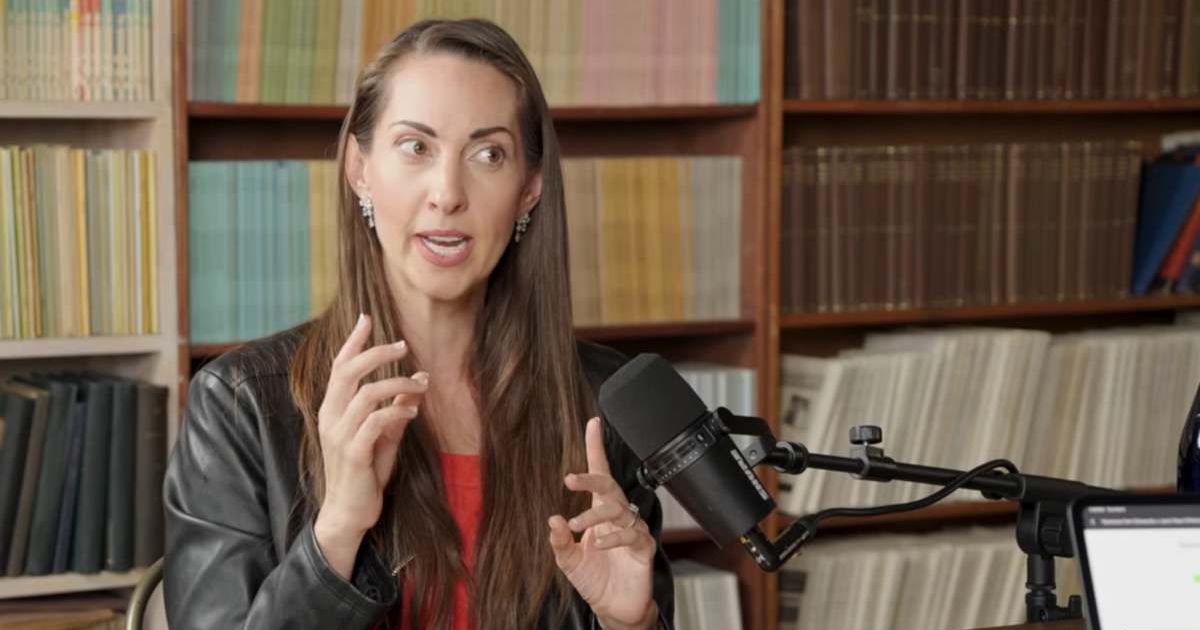
Are you someone who repeatedly finds themselves stuck in toxic relationships? If it's a yes, then you're not alone, and it doesn't mean that you are blind to a person's red flags. Then what is it? Harvard instructor Vanessa Van Edwards (@vvanedwards) says you're just too kind for the cruel world. In a podcast with Jack Neel, the behavioral expert shared why the kindest of people always attract monsters, and it's a lesson wrapped in psychological insight.
Edwards explained that there are three types of people — heroes, victims, and healers/helpers — and, unfortunately, the kindest people on Earth are always healers whose entire personality is built on helping others. She explained that people with a hero-self narrative are high achievers because they learn from the challenges without letting those experiences shape their identity. Meanwhile, victims are those who are easily demotivated by hardships. Then come the healers, who dedicate their entire lives to helping others.
Edwards shared that individuals with a helper mentality often work in public service sectors, such as hospitals, nursing homes, and educational institutions. "High-conflict people seek those people out," she added. Edwards, also a best-selling author, explained that healers are often taken advantage of, simply because they don't set boundaries. When someone intentionally plays the victim, heroes walk away immediately, while healers pick them, determined to mend what's broken. "They pick these people over and over again, and they get into the same horrible friendships. They get into the same romantic relationships, and they pick the same terrible bosses, because a part of them is like, 'I could fix them,'" Edwards added.

A series of studies on generous employees found that 'givers' often fall easy victims to exploitation. For instance, researchers first asked managers how generous they think their employees are and found that they were more willing to take advantage of subordinates who are more generous than the rest. The second study delved further into why it happens, and they found that managers assume that generous employees would easily agree to their unfair request. So, they are more comfortable putting them in unpleasant situations. Statistically, a Paychex survey found that while more people reported helping their peers at work, only 43.4% said their coworkers helped them sometimes; however, 21.6% of respondents reported rarely receiving any help. Both research findings further justify what Edwards explained about healers on the podcast.
Meanwhile, reacting to Edwards' justification, @tales_of_the_boogieman commented, "I think it is because we kind of know how lonely it feels that no one is coming to save you, so you don't want others to go through the same. But yeah. We need to establish boundaries." @copious_soul wrote, "It's not kindness that attracts bad people. It's the walking wounded, the false-persona people-pleasing injured, that attract the psychopaths." @_iam_chosen shared, "It’s so true, and these people always have a conflict, so it’s never-ending. Your help and kindness aren’t fully impactful with high-conflict people."
You can follow Vanessa Van Edwards (@vvanedwards) on Instagram for more inspirational content.
More on Scoop Upworthy
Former Secret Service agent reveals foolproof method to test if someone's 'taking advantage' of you
10 subtle red flags in people's behaviour that are often overlooked by the society
Woman finally stands up to selfish friend after being hurt by 'one-sided friendship'
 Share on Facebook


