A woman went into labor 35,000 feet above ground. Now her baby's citizenship is up in the air
With limited personnel, her fellow travelers came to her aid, assisting in delivering the newborn

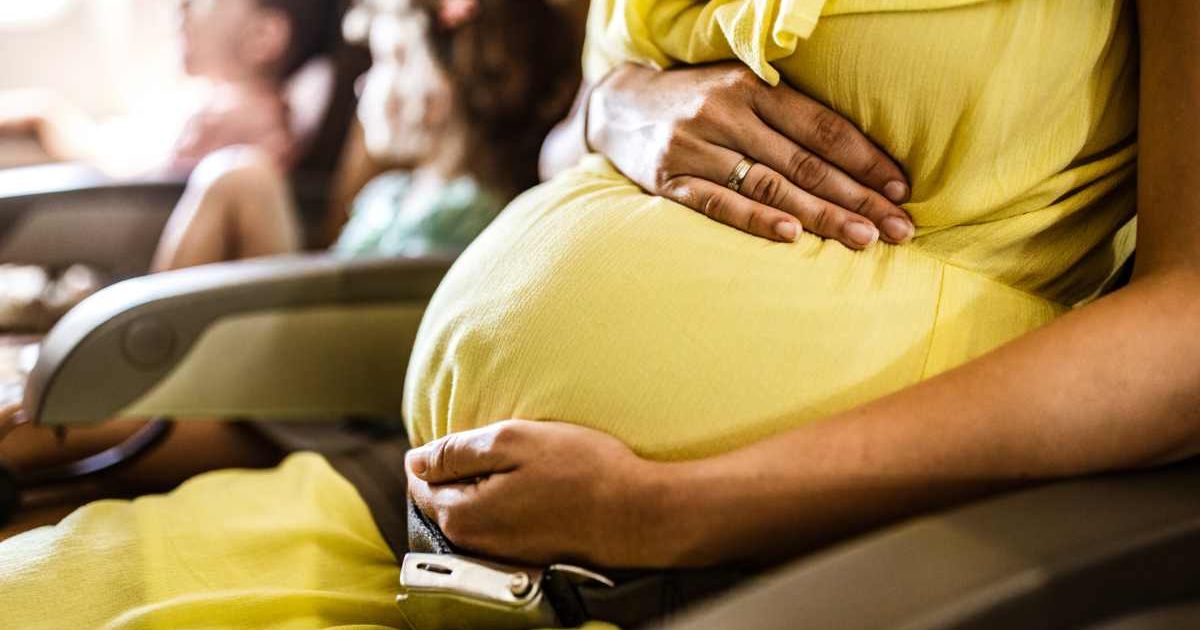
Midway through a nap at 35,000 feet, passengers aboard the Caribbean Airlines Flight BW005 were jolted awake. However, it wasn't because of turbulence but because of the cry of a newborn echoing through the cabin. On April 4, 2026, a mother whose identity remains private went into sudden labor while en route from Kingston, Jamaica, to New York, U.S.A., turning a routine flight into a delivery room. While the crew and a few helpful travelers successfully assisted with the birth before landing at JFK, a much larger dilemma awaited them, according to the New York Post.
Since the delivery occurred in the murky airspace between maritime borders and U.S. territory, the citizenship of the infant in question was in jeopardy, especially given the lack of information about the status of his/her parents and where the plane was at the exact moment the baby was born. If either parent of the newborn is already a U.S. citizen, the baby will also be one. If not, then things could get a bit tricky. According to the U.S. citizenship laws published by the U.S. Department of State, "The outer limit of the territorial sea of the United States is 12 nautical miles from the coastline," the document reads.
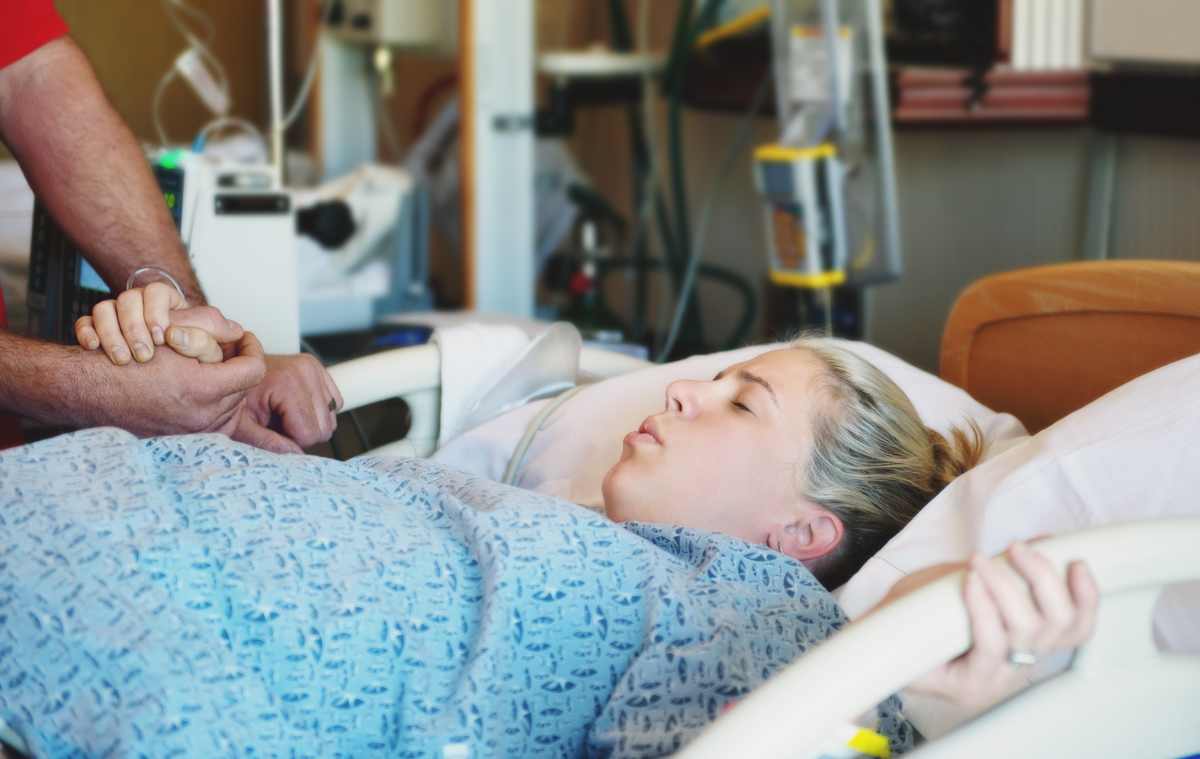
The rules applicable to vessels obviously apply equally to airplanes. “Thus, a child born on a plane in the US or flying over its territory would acquire US citizenship at birth." Generally speaking, US Customs and Border Protection (CBP) would require some documentation of the birth, generally an excerpt of the ship’s/aircraft’s medical log or master/captain’s log, reflecting the time, latitude, and longitude when the birth occurred.
A situation like this is extremely rare, given that Caribbean Airlines allows pregnant passengers to fly without a medical clearance up to the end of the 32nd week of pregnancy. However, it doesn't accept passengers after the 35th week, according to their website. Moreover, only 74 infants have been born on commercial flights between 1929 and 2018, out of whom 71 have survived, according to the National Library of Medicine. Although the infant's citizenship remains contested, they may already have a name.


In an ATC (Air Traffic Control) recording obtained by CBS News, we can hear: "Tell her she’s got to name it Kennedy,” a JFK ground controller creatively suggested for the new mother. Meanwhile, people are way too invested in knowing what nationality the baby will be, as Rebecca Ann questioned, "I just wanna know what the birth certificate would say as far as location baby was born??" Meanwhile, Noemi Marmol joked, "I hope this baby has free flights for the rest of his life."
More on Scoop Upworthy
This article originally appeared 1 month ago.
 Share on Facebook


