After 15 years of silence and pain, autistic twins finally 'spoke' to their mom
The change has given the twin boys hope to pursue careers in science and medicine.

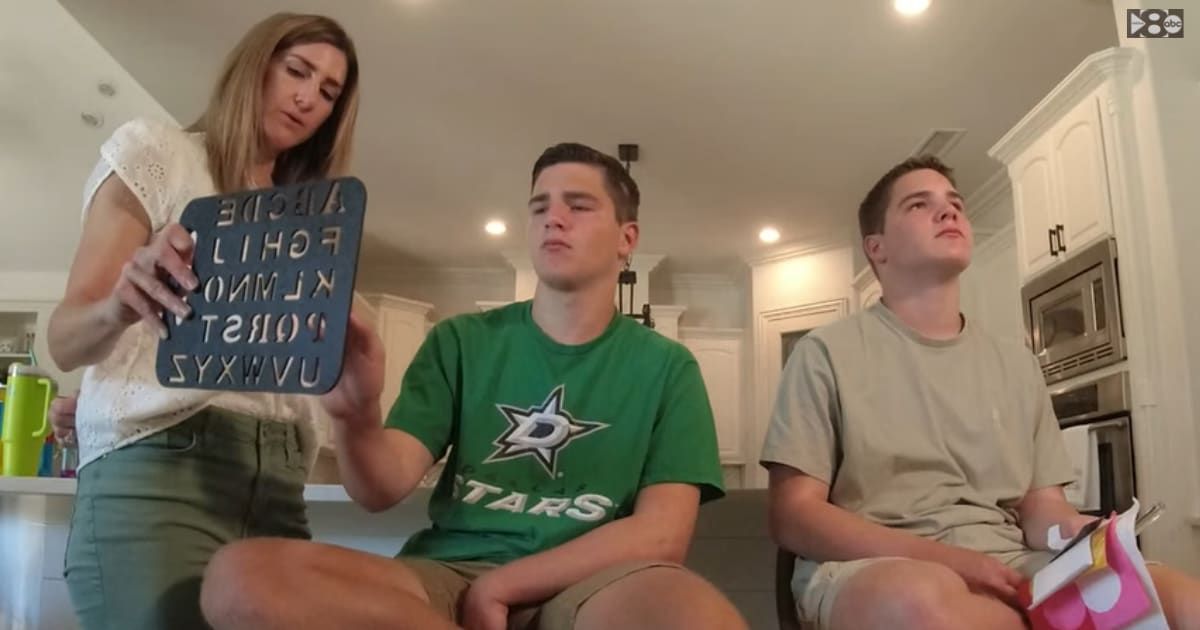
Gabe and Gatlin Britt, the twin brothers from North Texas, were born completely healthy to Sarah Britt until 18 months later, when she realized there was something wrong. The brothers couldn't speak for the longest time, and they wouldn't even respond to their names being called. Despite uncertainties, Sarah told WFAA that she and her husband stayed optimistic about their competence, but as their sons grew older, their hope began to diminish. Sarah, still in denial about her sons' condition, let educators teach them at about a first-grade level for over 15 years, but nothing worked until she took them to a local clinic to try a life-changing technique.
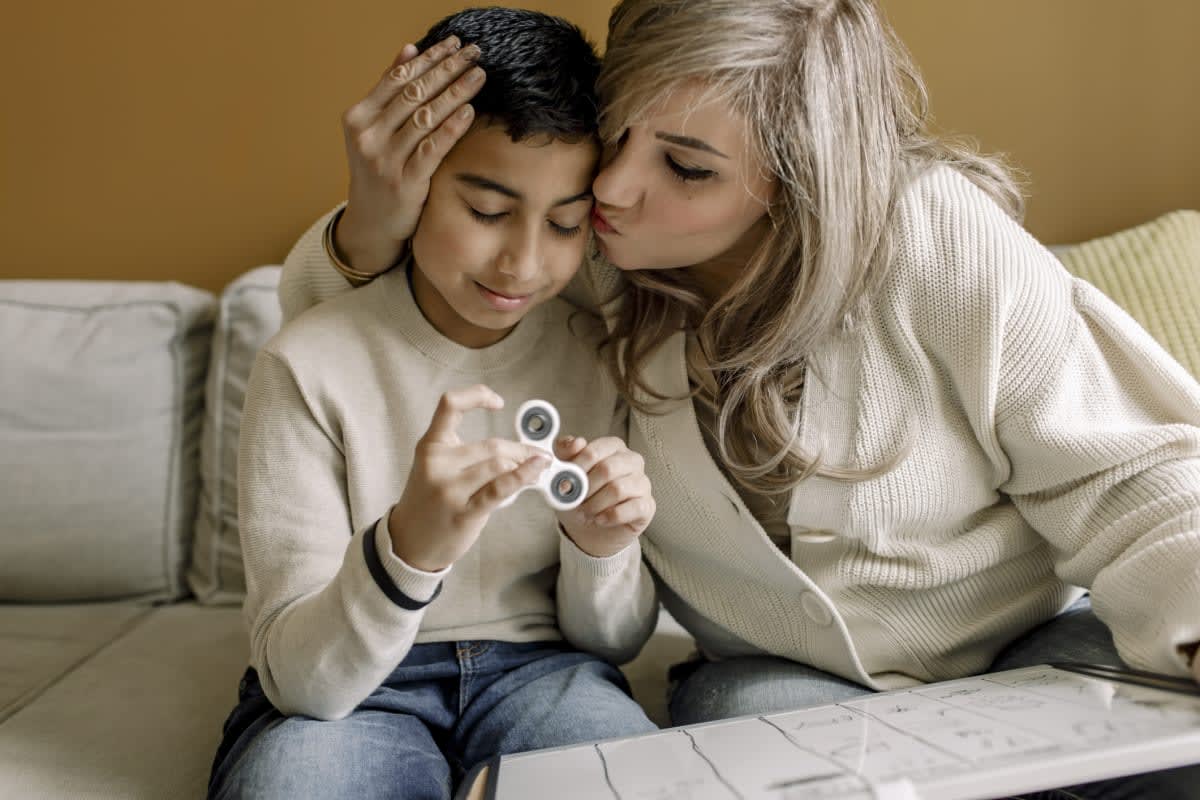
Sarah wanted to use the Rapid Prompting Method (RPM), a technique to aid autistic individuals and those with other disabilities that impact their ability to communicate. Developed by Soma Mukhopadhyay, the Executive Director of Education at Helping Autism for Learning and Outreach (HALO) and a mom to help her autistic son, RPM is believed to foster communication through typing, pointing, and writing, according to Great Speech. Surprisingly, Gabe and Gatlin, the twin brothers with autism, accepted the method, and after only two visits, they could communicate their thoughts with ease.
Growing up in a world where being non-verbal comes with a lot of stereotypes and discrimination, the brother had a tough time dealing with it. When asked about how they felt when people assumed them to be mentally disabled, Gabe and Gatlin both typed their emotions using a letterboard. "I was very frustrated, and I often felt sad and alone. I want the world to know I’m so smart, and I’m a person that matters," Gatlin responded. The groundbreaking change has given the twin boys hope to pursue careers in science and medicine. Despite challenges, both Gabe and Gatlin always led a happy-go-lucky life, but they said RPM has just made their lives a lot better. Meanwhile, Sarah, who feels fortunate to witness her sons overcome their limitations, said, "That’s been the greatest thing, for the world to finally see Gabriel and Gatlin for who they are."
While RPM has helped many families with autistic individuals or those with speech disabilities, the technique has grown controversial over time. In fact, the American Speech-Language-Hearing Association (ASHA) recommended professionals not to use RPM after reviewing it for a year. "Use of RPM is not recommended because of prompt dependency and the lack of scientific validity. Furthermore, information obtained through the use of RPM should not be assumed to be the communication of the person with a disability," the body said. Moreover, ASHA also raised similar concerns regarding Facilitated Communication (FC). This is another technique where a facilitator provides physical support to an individual with speech disabilities by helping them point to letters or symbols to communicate. However, the association called it a "discredited technique" and warned against its usage.

Netizens were overwhelmed to see the autistic twins finally gain the power to communicate, but they were more impressed by their mom, who never gave up on her sons. Many also shared their own experiences with kids on the spectrum; for instance, @muhlissa18 commented, "I went through something similar with my son when he started kindergarten in 2007. But then, the iPod Touch and iPad opened everything up for him. We used Proloquo2Go (Augmentative and Alternative Communication app). By the time he got to high school, he was texting and emailing regularly. By the time he graduated, he was in the National Honor Society and in the top 15% of his class, even though tests still said he was severely nonverbal."
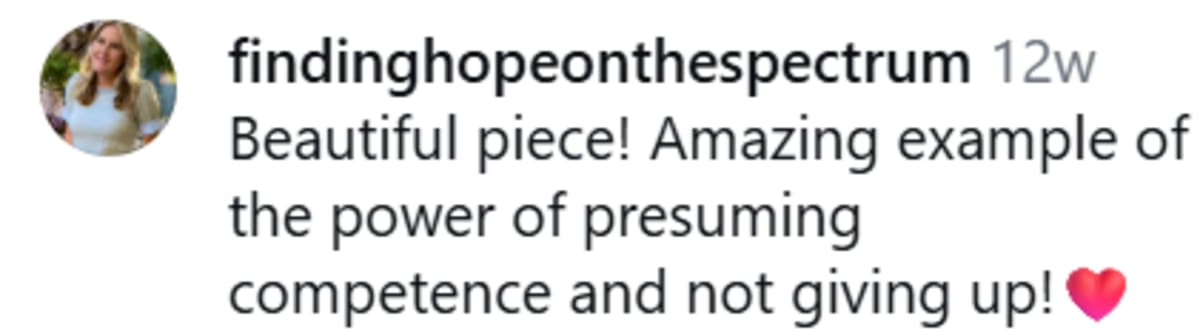

Similarly, @hils_style wrote, "It is so hard for people to understand that just because the words aren't coming out of their mouths, it doesn't mean they are not extremely intelligent and aware of everything going on. My son is on the spectrum and has a hard time with sentences. He mostly says one or two words. But at 5 years old, he reads and writes in multiple languages and is able to do Algebra 2 and Calculus in his head. Every day you advocate for them, but this uphill battle just becomes harder and harder."
More on Scoop Upworthy
Autistic boy and speech pathologist share flight, her discovery changed his life forever
Autistic boy who was once non-verbal grows up and writes book for autistic children
 Share on Facebook