HOA sued an Army vet over her 'therapeutic bees,' claiming they stung board members. She said they’re 'not the problem' and sued back for $250,000
'It's not my bees that are the problem. ...'

Tyra Swanson’s front yard lot is the smallest in the entire neighborhood. After retiring from the Army nearly ten years ago, she took up beekeeping as a hobby, and for the last five years, the steady buzz of bees has been a source of therapy for her, along with the surrounding wildlife. But this summer, the sweet tranquillity of Conroe, Texas, home was disturbed after the Lake Forest Falls HOA slapped the veteran with a deed restriction violation. They also closed a neighboring park, blamed Swanson, and even dragged her to court. Now, Swanson and the HOA are suing each other, with court records cited by KHOU showing that she is seeking less than $250,000. Swanson, however, said what she ultimately wants is a court ruling on whether keeping the hives actually violates the neighborhood’s deed restrictions, according to an October 20, 2026, report by CBS affiliate KHOU 11.
Tug of war over a therapeutic beehive
“It’s therapy for me," Swanson told the outlet. "There’s something very peaceful about the hum of the bees, and there are studies done about the health of the hive and breathing in the air from the hive." However, the HOA claimed that her bees stung one of the association’s members who was at Spillway Park. The association also shut down a neighborhood park, blaming Swanson’s bees, who, according to them, are stinging residents and causing safety problems.
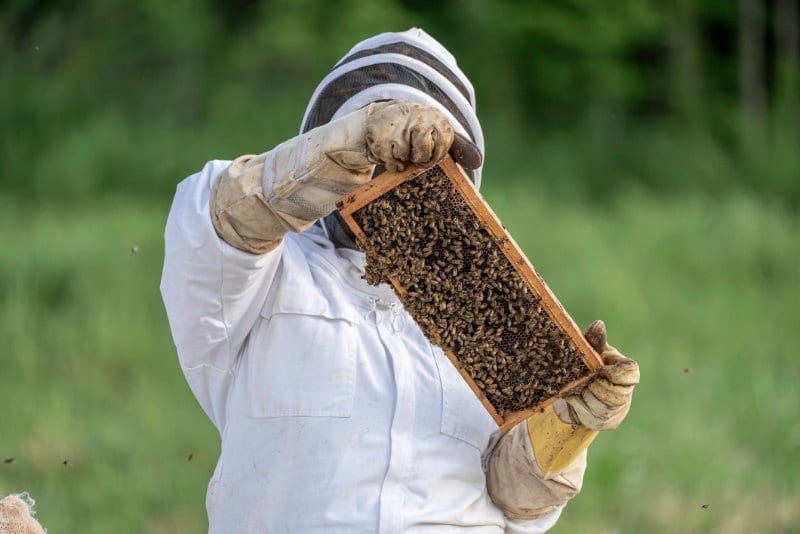
Bees versus the HOA
Swanson had a different take in the battle. She said that even other residents in the colony own bees, but the HOA has particularly targeted her due to her house’s location in relation to the park. “It’s not my bees that are the problem,” she said. “They’ve become the subject because of the proximity. And I’ve received letters from the association where I used to be a board member.” She asserted that she doesn’t plan to move the beehives no matter what, given that they receive shade from nearby trees, which is very important for the colony’s environment. Swanson, who previously served in the association, said moving bees anywhere else is not an option.
The bee debate continues…
An attorney representing the HOA said in a statement to KHOU 11 that the lawsuit was intended to enforce deed restrictions and protect residents using the neighborhood park. “There have been incidents where bees located on a lot abutting the park have attacked members,” the attorney said. “The Association does not wish to vilify the owner on a public platform, so my client is keeping the facts of [the] case between the owner, the Association, and the Court. The Board of Directors of the Association believes in the justice system and will await the Court’s ultimate judgment.” On the other side, court records cited by KHOU show Swanson is seeking less than $250,000 in the litigation. But she told the outlet that her main goal is much simpler: she wants a judge to decide whether her beehives actually violate the neighborhood’s deed restrictions. She maintains that they do not.

The legal fight took another turn just two days after KHOU 11's report. On October 22, 2026, the Texas Thirteenth Court of Appeals upheld the dismissal of an earlier lawsuit Swanson had filed against Lake Forest Falls. That case stemmed from an April 2025 letter asking her to move the hives away from a neighborhood pavilion. The appeals court also left in place a $2,500 attorney's-fee award to the HOA. The ruling does not appear to settle the newer dispute reported by KHOU, however. The court noted that the HOA said Swanson had since filed another lawsuit, but declined to consider it because that case was not part of the appellate record.
The eternal HOA battles
This is a recurring issue in communities governed by HOAs. A September 2026 analysis by LS Carlson Law examined 50,962 U.S. civil court-filing records from a three-year period and identified 17,136 direct disputes between homeowners and their associations. Within that group, the share of cases initiated by homeowners rose from 42.6% in the first matched year to 51.6% in the latest. The researchers cautioned that this does not mean HOA lawsuits overall are increasing, because the study measured who initiated the cases rather than national litigation rates.
Affirming what happened with Swanson in this case, Luke S. Carlson, the firm's founder, said in a press release. "We hear about associations pursuing homeowners over unpaid assessments and rule violations. But the court records also show thousands of homeowners bringing lawsuits of their own, often over the condition of their properties and the way their communities are governed. These are consequential disputes involving people's homes, finances, and property rights."
Closure of the park is another issue
Meanwhile, as the HOA has enforced closure of the park, residents are eagerly waiting for it to open and are worried about its maintenance until then. Swanson, who didn’t do anything to trigger the closure, hopes that the matter will be resolved without her having to move the hives. “My hope is that this neighborhood will remain peaceful and that they will go to maintain the park,” she said.
Viewers weren't convinced the bees were to blame


Viewers were also divided over whether Swanson’s hives could definitively be blamed for the reported stings. @markharwell8793 questioned how anyone could know the insects involved had actually come from her hive, asking, “You personally tracked the bees from her hive to the person stung?” Meanwhile, @heptolisk argued that honeybees are often confused with other stinging insects: "You have to actively try to be stung by honeybees. Yellowjackets are a problem all over, and uninformed people mix them up. With lots that size, why shouldn't someone have chickens if they don't violate a noise ordinance?"
More on Scoop Upworthy
 Share on Facebook