Why have millions of Argentine ants been fighting a war in California for decades?
The Argentine ants are fighting a supercolony war in San Diego, but they're not originally from California.

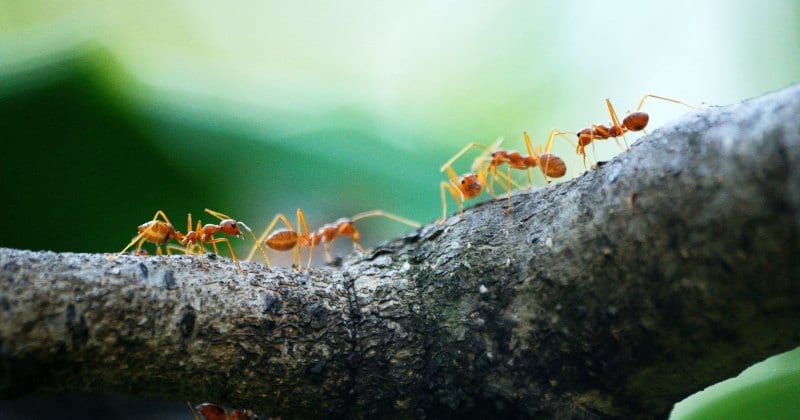
Ants are extremely loyal to their colonies and would literally go to war for them. That is exactly what the Argentine ants (Linepithema humile) have been doing in San Diego. Argentine ants are extremely territorial, aggressive toward other insects, and detect whether another insect or ant is an enemy or a friend. For years, millions of ants from different supercolonies have fought and died in these "wars." Experts even compared the San Diego ant war to the First World War. Odd Danny covered the story on October 17, and it has since received over 100,000 views.
How were supercolonies formed?
The Argentine ants are fighting a supercolony war in San Diego, but they're not originally from California. During the 19th century, Argentine ants, native to South America, were accidentally shipped via the Atlantic during international trade. They happened to be on cargo that traveled from South America to different parts of the world, including Japan, Europe, and obviously California. Since there were fewer ants back then, they had less genetic diversity and recognized each other by their "scents." This allowed them to treat other ants from different nests as "kin," rather than enemies, which later led to the creation of the supercolonies.
Most powerful colony in California
The second question was if they got along in the beginning, why are they fighting now? A 2006 paper published in Molecular Ecology revealed there were five rival supercolonies of Argentine ants in California. The most powerful colony is 1,000 km long and is made up of a network of loosely connected nests. Next to it, there are three to four smaller colonies. Since the colonies are separated by a few meters, whenever ants from different colonies come in contact, they get into violent clashes.
The reason why Argentine ants are extremely violent is the lack of a "dear enemy effect." Mark W. Moffett, a biologist, explained that Argentine ants are territorial animals. The "dear enemy effect" is a phenomenon where animals show less aggression towards their "rivals" after fighting them for a long period of time. But since Argentine ants do not have it, there is a possibility their "war" will go on forever.
Mini WWI
Researchers from UC San Diego studied the ants for a period of six months. During 40% of their site visits, they reported an average of 15,000 dead ants during every battle. The death toll kept increasing month after month. During one particular "war," around 15 million worker ants died in one of the smaller colonies near Lake Hodges. Experts even compared the San Diego ant wars to the First World War, specifically the scene at the Western Front. Both sides fought for years, but the battle lines barely moved. Similarly, the supercolonies fought for years, but scientists failed to see any huge shifts in the borders of the colonies.
Rooting for the home team


Netizens were amazed at what is happening on the ground every single day. @kingcooperthe1st wrote, "Wonder who counted all the dead ants." @vanillajack5925 added, "That's a war fought over 400 generations. That would be about 10,000 years for humans."
More on Scoop Upworthy
NASA's research on spiders reveals intense effect caffeine has on nervous system
Scientists find cat parasite that fuels risky behavior in humans. Almost 60% of us have it
 Share on Facebook