ABC TV put babies and snakes in a room together. It revealed something primal about 'fear'
'Along with heights, there's only one other fear that appears this early in our development, the fear of loud noises,' the narrator said.

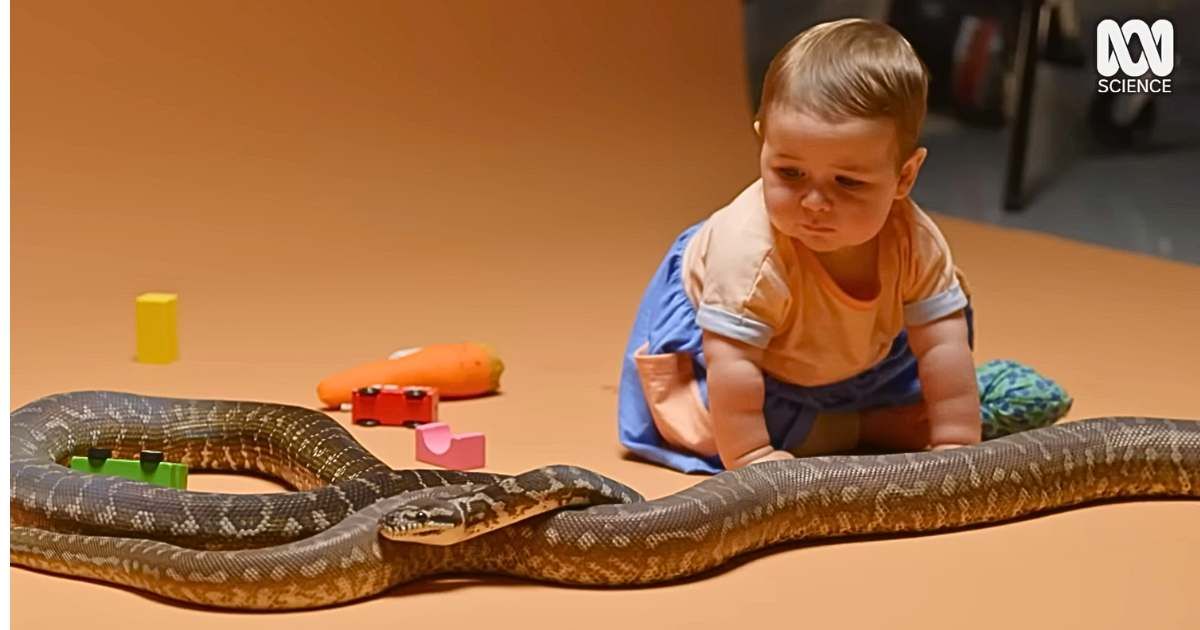
Most adults can name at least one thing that makes them uneasy, whether it’s snakes, spiders, or standing too close to a ledge, and many of those reactions feel automatic even if nothing bad has ever happened before. Experts, however, have long suggested that a large number of those fears are not present at birth but develop gradually through observation and repetition. A segment shared on YouTube by @ABCScience put that idea into practice by placing a group of infants in a carefully supervised room with non-venomous snakes to see how they would respond.
The babies were seated on the floor with toys while trained handlers introduced the snakes into the space. The host made it clear the setting was controlled, explaining, "These are trained snakes that are used to being with humans. They're nonvenomous." Even so, as the snakes began moving across the floor, the adults watched, concerned.
The infants, however, continued doing what infants typically do. They reached toward whatever was within range, examined nearby objects, and calmly touched a snake's face. They appeared far more interested in their toys than in the animals around them. As per the video, only a small number of fear responses appear reliably in early development. "Along with heights, there's only one other fear that appears this early in our development, the fear of loud noises. All of the others, including the fear of snakes, are learned later," the narrator said.
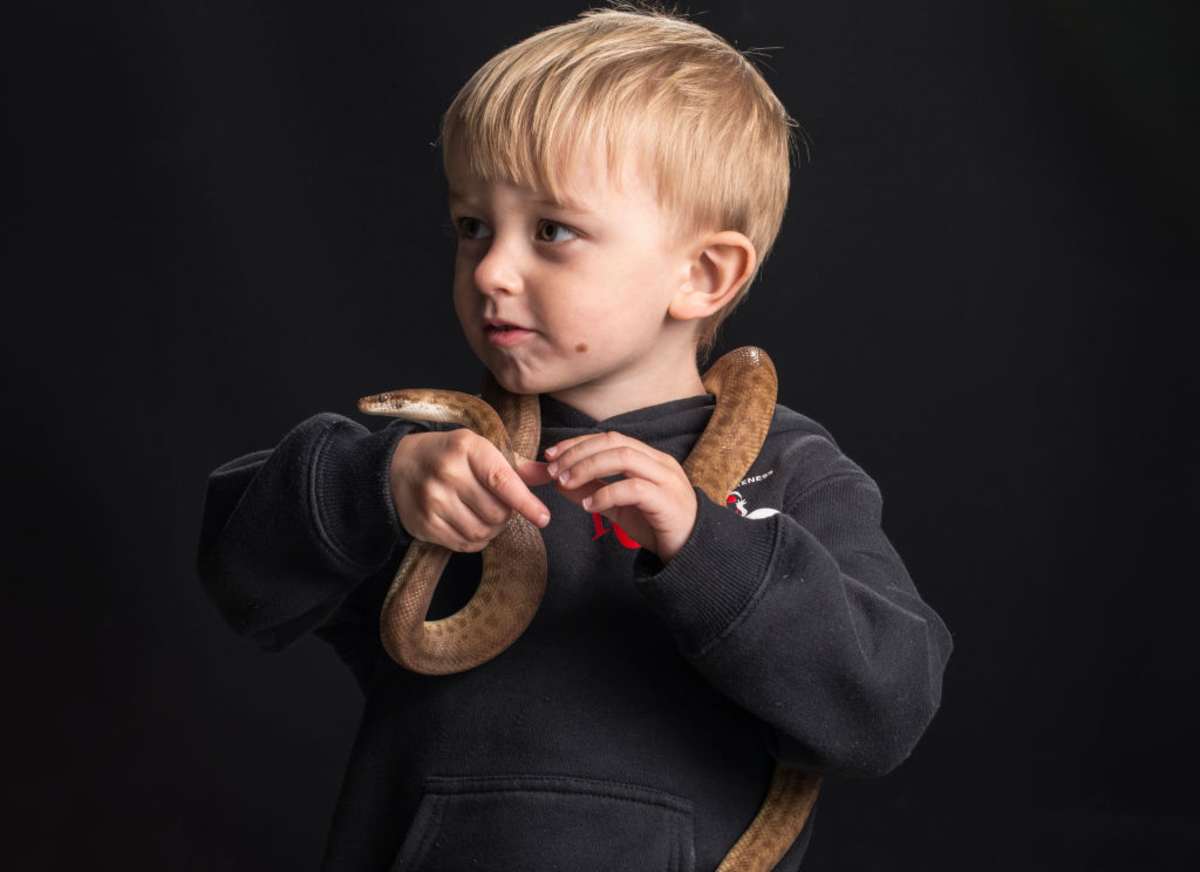
She added that babies closely monitor the emotional expressions of caregivers when something unfamiliar happens. "If something new or different occurs, the child will often check in with their caregiver's face to go, 'Is this something I need to worry about or not?' And in that split second, if the caregiver shows fear, the child will often react with fear as well," the expert said. The babies’ calm reaction might feel surprising to adults, but studies show these signs have been observed in early development.
A large review of infant behavior published in Developmental Psychology looked at how babies react to things adults commonly fear, including snakes, spiders, heights, and strangers. After analyzing findings from multiple experiments, researchers found that while babies often look longer at these objects, they usually do not show clear signs of fear, such as crying, pulling away, or distress. Instead, infants tend to study what’s in front of them and then look for parents or caregivers for cues about how to respond.
That early curiosity changes over time. According to the National Institute of Mental Health, about 12.5% of US adults experience a specific phobia at some point in their lives, and 9.1% experience one in a given year. These phobias often involve animals or natural environments and often begin in childhood, strengthening with repeated exposure or reinforced reactions. The segment also acknowledged that learning caution has practical value. "Being taught to be wary of animals like snakes is a useful life skill," the expert noted, pointing out that some species can be dangerous.
More on Scoop Upworthy
Woman carries out an experiment to prove men don't know how to look for things and it's on point
Man's experiment to prove humans can hear the difference between hot and cold water is mind-boggling
 Share on Facebook


