Experiment gave homeless people $5,374 cash and watched them for a year. It disproved our biggest bias
There was a 39% decrease in expenses the individuals spent on alcohol, cigarette, and drugs

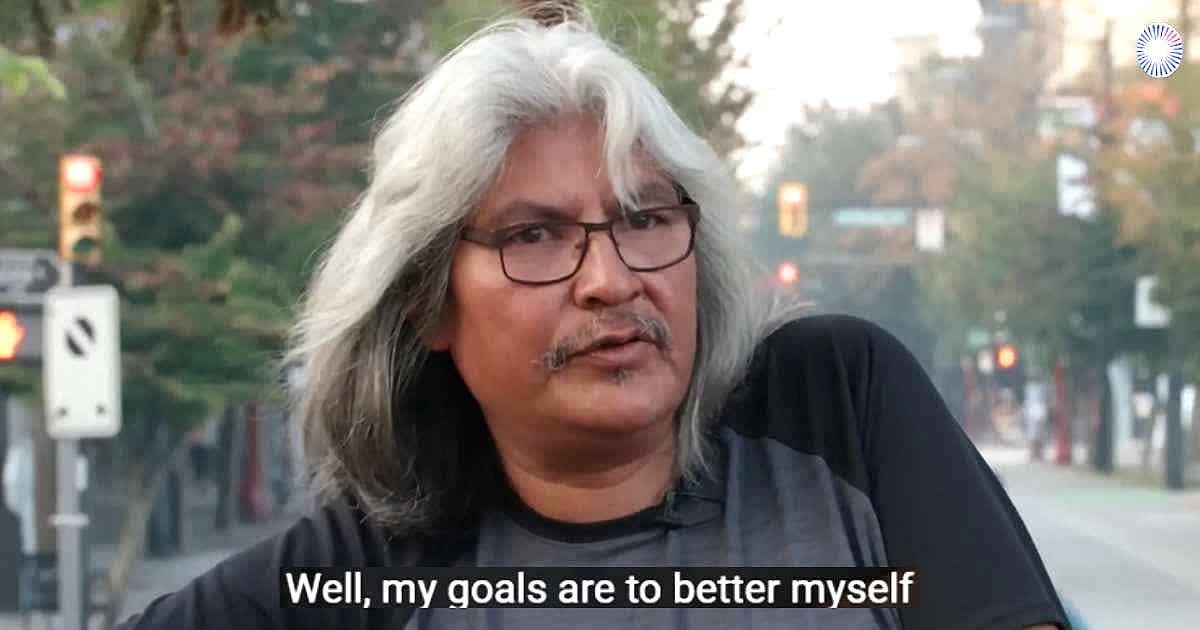
Homelessness is often viewed with pity, a hopeless condition caused by difficult circumstances. Sometimes it is viewed with suspicion and mistrust that a homeless person is more inclined to gravitate towards the shady sides of life, like drugs, alcohol, or crime. While none of these perspectives is entirely incorrect, they are not absolutely correct as well. Sometimes, all that a homeless person needs is kindness. Researchers from the University of British Columbia (UBC) questioned whether unconditional money would reduce homelessness in Vancouver. As part of their “The New Leaf Project,” they published this analysis in the journal PNAS. The results, as they told CBC, were "beautifully surprising."
A fresh start
“There are certainly people who are homeless who have deeper, more severe problems, but for many people, it’s simply a matter of — they ran out of money, lost a job, fell on hard times, became homeless.” Steve Berg, a vice president with the National Alliance to End Homelessness, explained. To see if money really was the only thing they needed to solve their problems, researchers gave 50 homeless people a lump sum of 7,500 Canadian dollars (approximately $5,374).
Money matters
Following the cash infusions, they studied the lives of these people for 12-18 months, comparing them with a second group of 65 people who didn’t receive the cash. Participants were between the ages of 19 and 64 years and were assessed to make sure they had a low likelihood of experiencing significant mental health problems or substance abuse issues. Those who received cash found stable housing more quickly than the second group, who took an additional 12 months to secure permanent housing. Nearly 70% of the people in the first group successfully procured the food security they needed.
Claire Williams, the CEO and co-founder of Foundations for Social Change, the organization that led this project, said that people clearly knew what they’d do with the cash they received. Ray, one of the cash recipients, used it to upskill himself with a computer training course. Most cash recipients spent 52% of their reward on food and rent, 15% on medications and bills, and 16% on clothes and transportation. The experiment also benefited the shelter homes across Canada, as many homeless people, after receiving money, moved out once they found stable accommodation. As a result, the shelter homes saved 8,100 Canadian dollars (5,805.07 American dollars) per person, which is approximately $405,000 (290,253.38 U.S. dollars) per year.

Challenging stereotypes
Contrary to the notion that homeless people squander their money, researchers noted a 39% decline in expenses on alcohol, cigarettes, and drugs. Williams said the study dismissed the idea that homeless people mismanage their money. "It challenges stereotypes we have here in the West about how to help people living on the margins," she said, and added that all they need is an intervention that will provide them with choice and dignity to move forward on their own terms. Berg added that "people can be relied on, if they get the money upfront, to take care of the problem themselves.”
A ray of hope
According to the 2020 count by the BC Non-Profit Housing Association (as cited on UBC), Metro Vancouver had 3,634 homeless people, of whom 1,029 were unsheltered, and 2,605 were sheltered. This count didn’t include the names of those who slept in their cars or were involved in couch-surfing. For this project, funding came from a grant from the Canadian federal government, combined with help from donors, non-profits, and foundations.

Dr. Jiaying Zhao, lead study investigator, told TODAY that this study will shift perspectives about homeless people and influence positive changes in government policies. Meanwhile, participants such as Ray are grateful and hopeful for their future. "I kind of want to give back to where I've come from," said Ray. "I might one day be that important person that has a powerful voice... a seed can grow into an oak tree," he added.
More on Scoop Upworthy
Millionaire opens the doors of his $4M mansion to homeless couple living across the street
Real estate broker turns homeless man's life around after he returned lost $10,000 check
Britain finds the most straightforward solution to solving poverty — by giving homeless people money
 Share on Facebook


