Why this 19th-century painting of two lovers' final goodbye is only displayed 2 hours a week
The painting captures the love story of a medieval knight and a royal lady, embracing each other during their last meeting


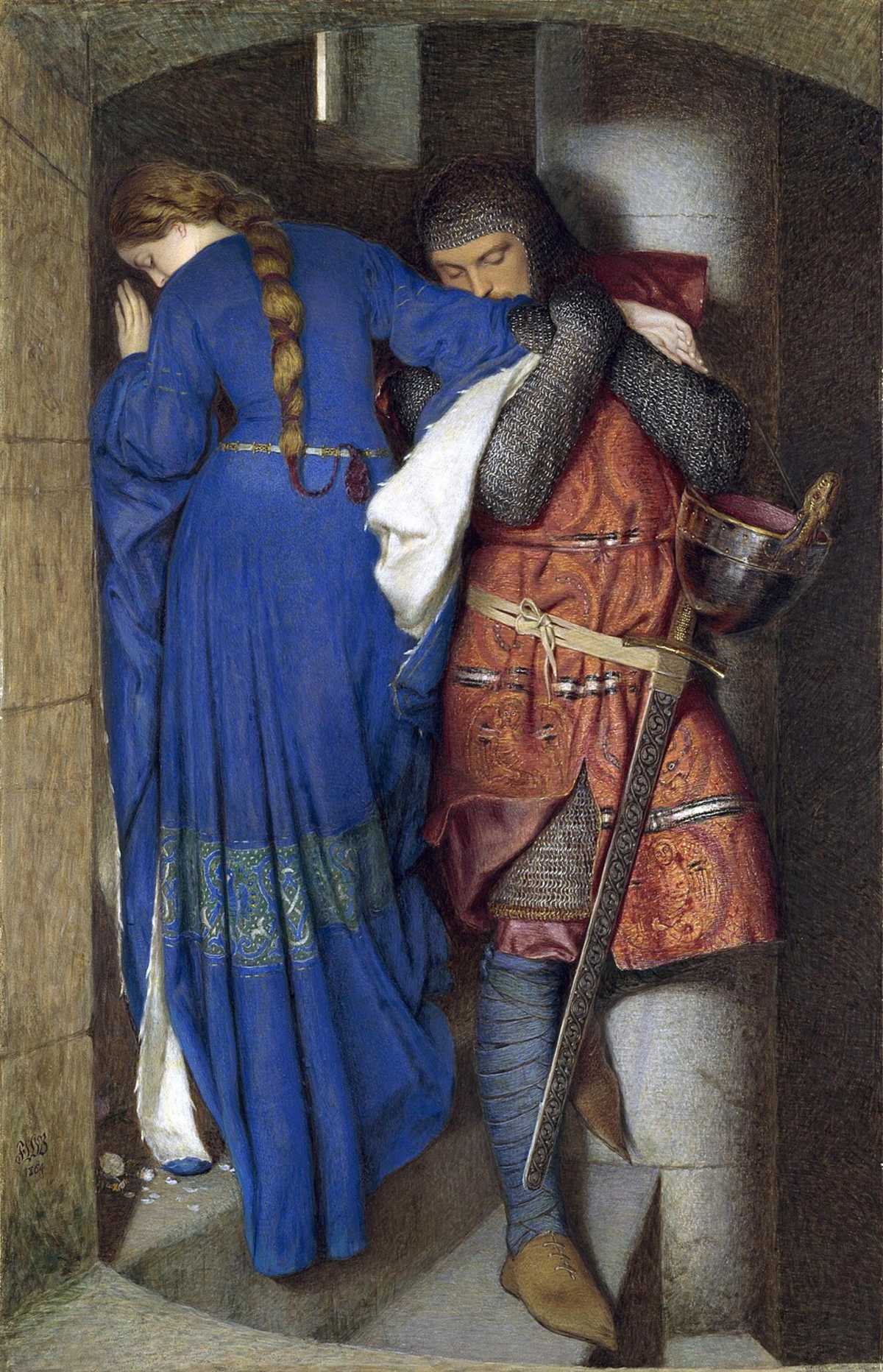
During the medieval age, Princess Hellelil fell in love with her personal guard, Hildebrand, the Prince of Engelland. Her father disapproved of their relationship and ordered her seven brothers to kill him. Irish painter Frederic William Burton captured the achingly beautiful moment of their last meeting, when the medieval knight was moments away from his death. The famous painting named "Meeting on the Turret Stairs" (1864) is currently exhibited by the National Gallery of Ireland (NGI) in Dublin. The painting, however, is open to the public only for two hours a week.
Why visitors can see it for only two hours a week
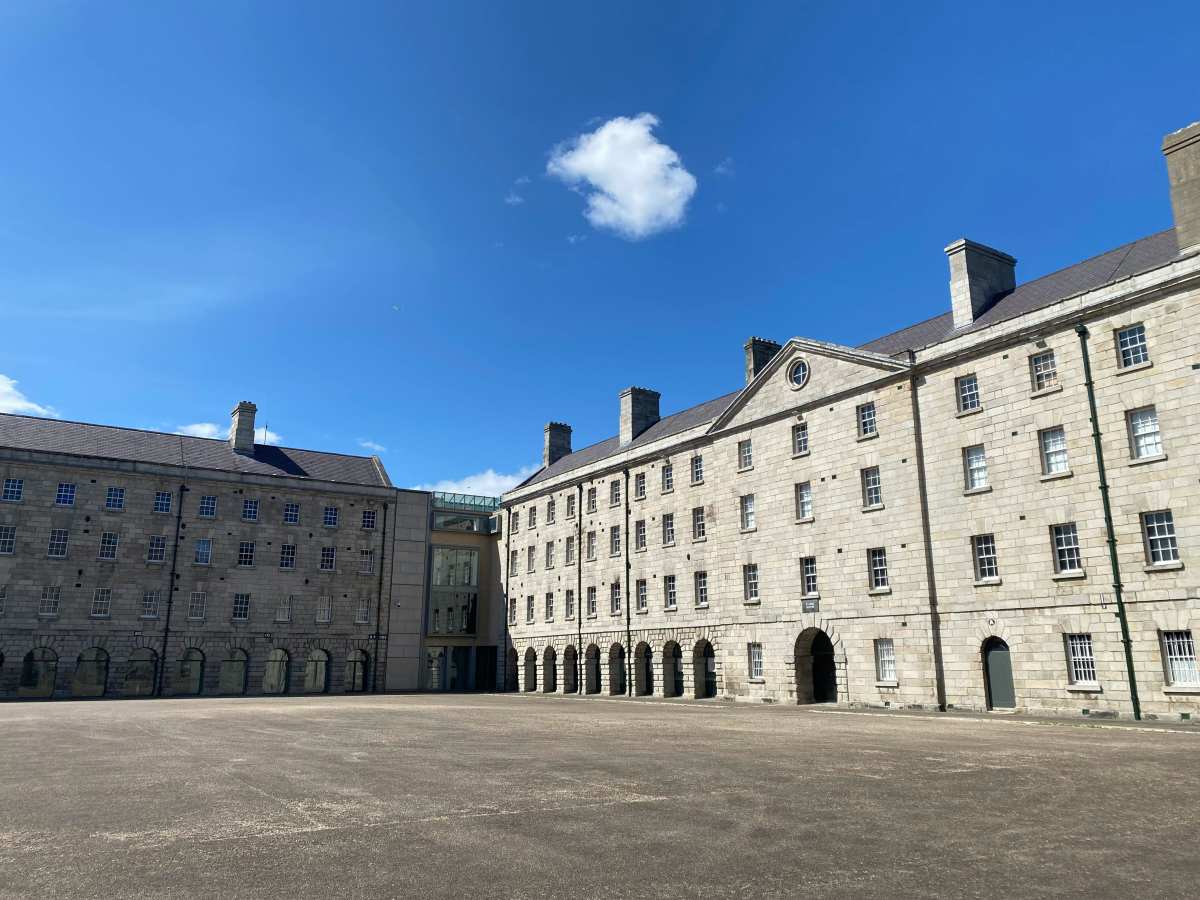
Formally titled "Hellelil and Hildebrand, The Meeting on the Turret Stairs," the artwork is considered one of Ireland's most beloved paintings. The gallery keeps the light level dimmed to low so the painting doesn't get overexposed and become spoiled. According to the BBC, because it is sensitive to light, the painting is available for viewing in NGI only one hour twice a week, at the time of writing, Thursdays 11:30 a.m. to 12:30 p.m. and Sundays 2 p.m. to 3 p.m.
The medieval ballad behind the masterpiece
This particular painting is believed to be inspired by a medieval Danish ballad translated by Burton's friend Whitley Stokes, who was a Celtic scholar. While the painting exhibits the finesse and brushstrokes of an oil painting, it is actually crafted in watercolor and gouache on paper. Hellelil’s bright blue dress, neat strokes on her golden brown braid swinging over her back, the intricacy of Hildebrand’s sword and chainmail, the haunting vibe of shadows on the cabinet.
The most passionate aspect of the painting is perhaps the very moment Burton chose from the story. In the painting, the arms of the lovers are intertwined. With tenderness in his facial expressions, he is kissing her arm, while she is turned away, her head lowered and her eyelids shut in despair. The fragments of white further intensify the intense emotion of their last meeting on turret stairs rose that lay trampled near Hellelil’s feet.
The artist who brought the lovers to life
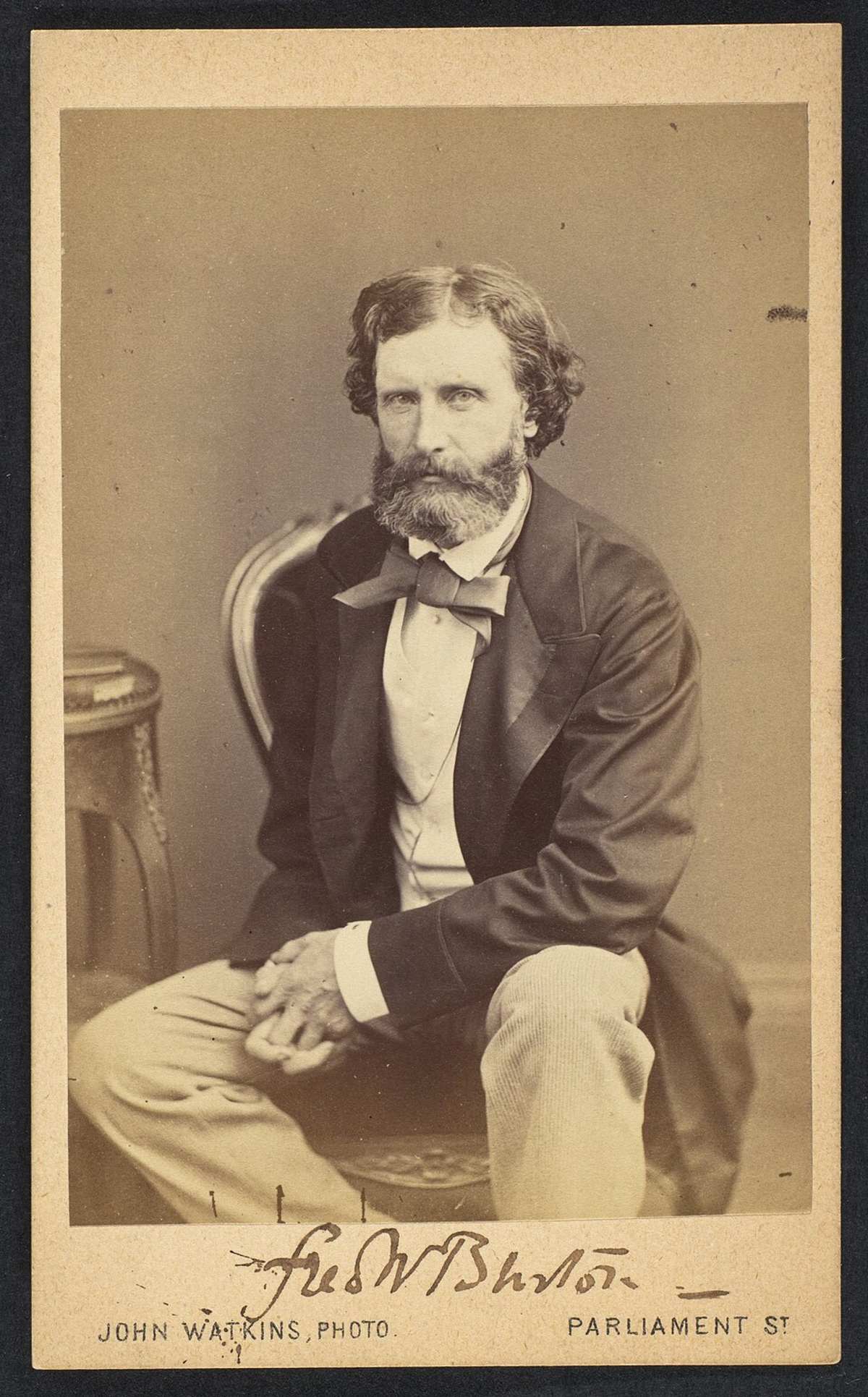
Born in 1816, Burton began his career by creating miniature portraits and ancient monuments. After a few years in his career, he moved from his hometown in Ireland to London to make a living as a watercolor painter. Later, he took the position of Director of the National Gallery. He was often known as an admirer of the Pre-Raphaelite painters, a connection that many of his paintings depicted through deep, jewel-like colors, intense emotional romance, and hyper-realistic attention to historical details.
The symbolism hidden in the farewell scene
Dr. Caroline Campbell, Director of the National Gallery of Ireland, shared with the BBC that the white roses could symbolise purity and loyalty. "Many people have got engaged in front of it," she said. "There's a copy in the main city registry office, so it's associated in many people's minds with love and marriage." English novelist and poet George Eliot once quoted, “It might have been made the most vulgar thing in the world, [but] the artist has raised it to the highest pitch of refined emotion.”
The popularity
Despite the limited display time, thousands of visitors arrive every week at the gallery to gaze at the painting and visualize the beautiful story of forbidden romance. The National Gallery of Ireland welcomed more than one million visitors in 2023 alone, and the painting was one of the biggest attractions. Besides, in a 2012 nationwide poll, it received 22% of the public vote to be named Ireland's favorite painting.
According to the ballad, the end of this story was tragic. Although the medieval knight Hildebrand succeeded in killing Hellelil's father and six of her brothers, he spared the seventh brother, who ended up giving him the final blow. Eventually, Hellelil also died, brokenhearted.
More on Scoop Upworthy
Invention of the Fettuccine Alfredo is a culinary love story inspired by a chef's love for his wife
Man's epic struggle to crack woman’s number from a cryptic note is a modern love story in the making
 Share on Facebook


