A 1968 mouse experiment could explain why most people are single today
John B. Calhoun often drew parallels to human society, writing that while he spoke of mice, his thoughts were on people.


Why are more people choosing to stay single, delay relationships, or opt out of having children altogether? That question was recently addressed by Istok Pavlovic (@istokp) in one of his Instagram videos, where he pointed to a 1968 experiment known as "Universe 25" — often called the "mouse utopia" study — as a possible framework for understanding modern social behavior. In his video, Pavlovic said, "This is why everyone is single, and men stop trying." He likens the sad outcome of the study to an overload in social interaction among humans today, which has led to more individualistic and alienating behaviors.
The study he referenced was conducted by behavioral researcher John B. Calhoun at the National Institute of Mental Health in Maryland. Officially named the Mortality-Inhibiting Environment for Mice, it was often described as mouse heaven or mouse utopia, as per the Science History Institute. In his experiment, Calhoun constructed a 4½-foot cube that removed traditional survival pressures entirely. The enclosure provided abundant food and water, stable temperatures, nesting material, and 256 apartment-style compartments connected by mesh tubes. Disease was screened out, and there were no predators. In July 1968, four male and four female mice were introduced into this space.
At first, the colony flourished— after an initial adjustment period, reproduction accelerated rapidly, and the population doubled roughly every 55 days. Within months, the number of mice reached hundreds, and by the 19th month, the colony peaked at around 2,200 inhabitants. Infant mortality, which is normally high in the wild, was minimal. On the surface, the experiment appeared to confirm that abundance produced stability. But as density increased, social dynamics began to change. Male mice typically establish hierarchies and disperse when defeated, yet in this enclosed system, there was nowhere for losers to relocate. Calhoun referred to these displaced males as "social dropouts" or "juvenile delinquents," as reported by The Scientist.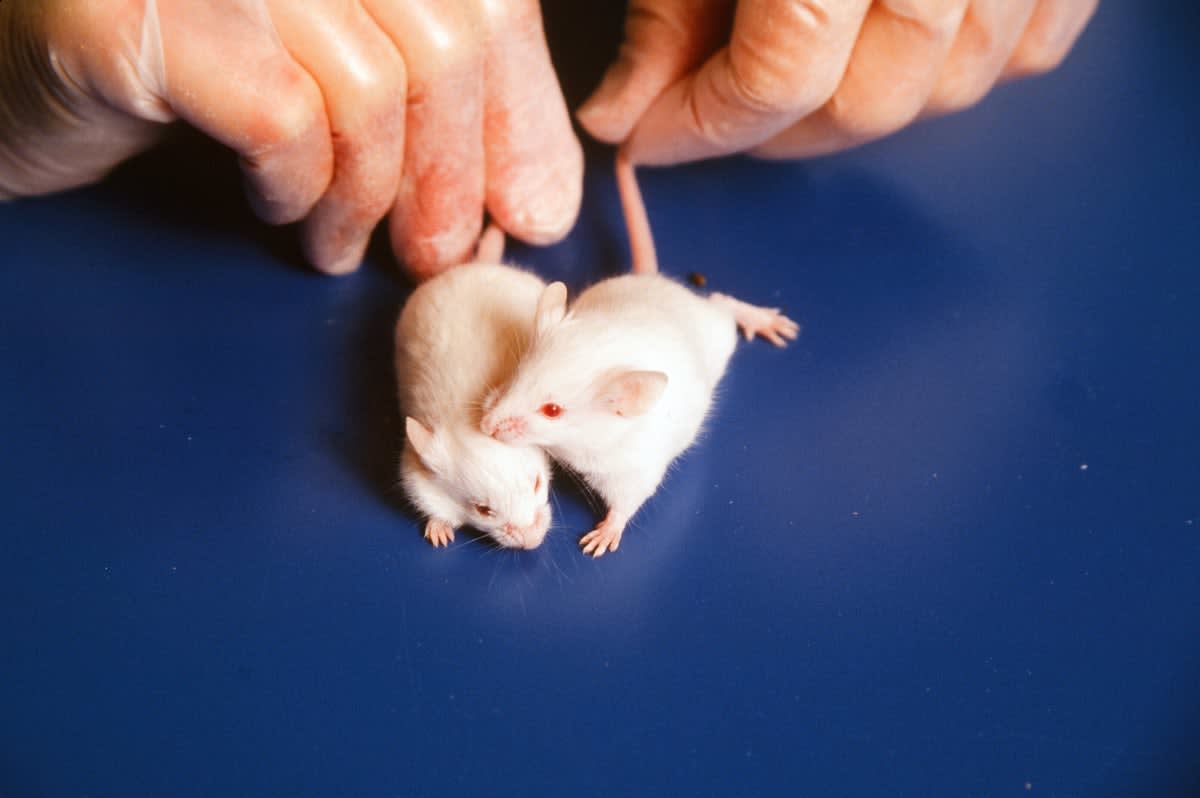
They congregated in central areas of the enclosure, where frequent and often violent altercations broke out. Dominant males, overwhelmed by constant challenges, struggled to maintain control of their territories, whereas nursing females were constantly disturbed by intrusions, and maternal behavior began to change. Some mothers ejected pups prematurely from their nests, while others neglected them amid ongoing disruptions. Over time, certain males withdrew from competition altogether and showed no interest in mating. Instead, they spent most of their time grooming and avoiding confrontation. Calhoun labeled them "the beautiful ones." Physically healthy and well-fed, they were nonetheless socially disengaged. Meanwhile, some females also isolated themselves and stopped reproducing, and by the 21st month, birth rates had sharply declined, and soon newborn pups rarely survived.
Within five years, the colony had collapsed entirely. Universe 25 has been interpreted in many ways since its conclusion in 1973. Environmentalists once linked it to fears of overpopulation, while others saw it as a warning about urban crowding or shifting social roles. Edmund Ramsden, a science historian at Queen Mary University of London, said in a paper published in 2011 that Calhoun’s findings were often shaped by the political climate of the time and later used in ways that went beyond what the experiment itself actually proved. Calhoun himself often drew parallels to human society, writing that while he spoke of mice, his thoughts were on people. This hyper accessibility and cognitive overload could be a large reason why 50% of Americans are single today.
In his video, Pavlovic’s interpretation centers on what he described as "social interaction overload." He argued that the mice were in constant proximity to thousands of others, exposed to continuous competition for status and stimulation, suggesting that this environment led them to "lose the ability to form bonds, to mate and raise their young." He connected this to modern life, stating that since the rise of smartphones, humans have been living in a comparable state of 24/7 comparison and visibility. In Pavlovic’s telling, the lesson is, "The mice couldn't turn this [smartphone] off, but you, you can."
More on Scoop Upworthy
Scientists have found unusual origins of kissing—and it wasn't romantic at all
Neuroscientist reveals Americans are in an ‘empathy’ crisis and there’s one main reason why
Neuroscientist reveals fascinating insight into why sad songs bring comfort and joy to many
 Share on Facebook